
Data Mining MCQs: Unearthing Insights from Big Data

Last updated by Naina Batra on Dec 19, 2024 at 10:33 PM
| Reading Time: 3 minutes
Contents

Preparing for Data Mining MCQs is essential for assessing a professional’s grasp of both fundamental and advanced concepts in data mining. It is a good way to gauge your knowledge and stay current with the growing competition.

Data mining is integral to predictive analytics. It is the process of extracting valuable insights from vast datasets, enabling organizations to make informed decisions and predict future trends.

As the volume of data continues to grow and more sophisticated tools and techniques are developed, this field is rapidly growing. So, you should stay abreast with the continuous advancements and test your knowledge your knowledge time to time.

MCQs are a great way to start here. Also, companies often use data mining MCQs in job interviews to assess the technical capabilities of candidates, particularly for roles related to data science, analytics, and IT. These MCQs are used in job screenings, training, and other interviews.

These MCQs on data mining cover a wide range of concepts, including data cleaning, classification systems, and outlier analysis. These questions also delve into the issues affecting the performance of data mining algorithms, highlighting scalability and efficiency.

Additionally, you’d also find questions on data discrimination, hierarchical clustering, KDD, sentiment mining, and so on.

Also Read: Data Preprocessing Techniques: The Foundation of Clean ML Data

Data Mining MCQs with Answers

To begin with, data mining and data analyst freshers, as well as experts, must stay updated with the latest innovations taking place in this field and must keep themselves well-informed about the major and basic topics in data mining.

This article brings the most important data mining MCQs and data analytics interview questions for data analysts to enhance and revise their knowledge in data science and prepare themselves for upcoming career opportunities.
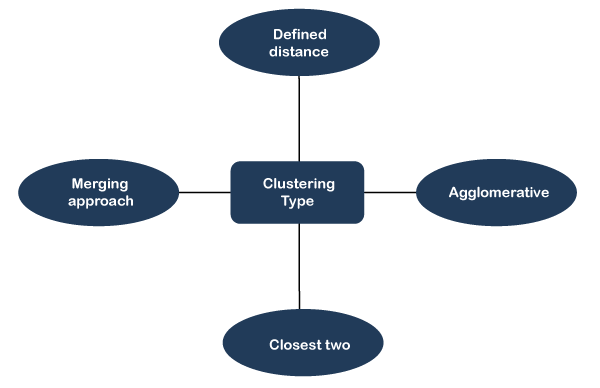
Q1. Which clustering is used in the diagram given below:

  1. Hierarchal
  2. Partitional
  3. Naive Bayes
  4. None of the above

Answer: Hierarchal

Q2. Which statement about data cleaning is incorrect?

  1. It refers to the process of data cleaning
  2. It refers to correcting inconsistent data
  3. It refers to the transformation of wrong data into correct data
  4. All of the above

Answer: All of the above

Q3. The data mining system of classification includes

  1. Database technology
  2. Machine learning
  3. Information Science
  4. All of the above

Answer: All of the above

Q4. The issues such as scalability and efficiency of data mining algorithms fall under

  1. Performance issues
  2. Mining methodology and user interaction
  3. Diverse data type issues
  4. All of the above

Answer: Performance issues

Q5. Which data object does not comply with the general behavior?

  1. Evaluation Analysis
  2. Outliner Analysis
  3. Classification
  4. Prediction

Answer: Outliner Analysis

Q6. What analysis is performed to uncover the interesting statistical correlation between associated attributes and value pairs?

  1. Mining of correlation
  2. Mining of association
  3. Mining of clusters
  4. All of the above

Answer: Mining of correlation

Q7. Which one is considered as the mapping or classification of a class or set with some predefined classes or group?

  1. Data characterization
  2. Data discrimination
  3. Data substructure
  4. Data set

Answer: Data Discrimination

Q8. Which statement is correct about the classification?

  1. It is a subdivision of a set
  2. It is the task of assigning classification
  3. It is a measure of accuracy
  4. None of the above

Answer: It is a subdivision of a set

Q9. Which clustering technique requires the merging approach?

  1. Partitioned
  2. Naïve Bayes
  3. Hierarchical
  4. Both A and C

Answer: Hierarchical

Q10. Which is the final output of the hierarchical type of clustering?

  1. Assignment of each point to clusters
  2. A tree displaying how close things are to each other
  3. Finalize estimation of cluster centroids
  4. None of the above

Answer: A tree displaying how close things are to each other

Q11. In data mining, what is KDD?

  1. Knowledge Discovery Data
  2. Knowledge Discovery Database
  3. Knowledge Data definition
  4. Knowledge data house

Answer: Knowledge Discovery Database

Q12. Select the chief function of the data mining process:

  1. Prediction and characterization
  2. Association and correction analysis classification
  3. Cluster analysis and evolution analysis
  4. All of the above

Answer: All of the above

Q13. Firms engaging in sentiment mining analyze data collected from:

  1. Focus group
  2. In-depth interviews
  3. Experiments
  4. Social media sites

Answer: Social media sites

Q14. What is the process of removing loopholes and deficiencies in the data?

  1. Extraction of data
  2. Compression of data
  3. Cleaning of data
  4. Data aggregation

Answer: Cleaning of data

Q15. Which of the following is used by the warehouse?

  1. Database table
  2. Online database
  3. Flat files
  4. All of the above

Answer: All of the above

Unearthing Insights from Big Data with Interview Kickstart

Data analysts working in any big company handle a huge set of data. It becomes important to be proficient at what they do. For instance, they need to be good at cleaning and processing data accurately and extracting valuable information from this big data to provide organizations with insights that can help them in multiple aspects.

While self-assessment is good, it’s better to go with a foolproof preparation strategy that could help crack those toughest interviews.

These MCQs cover the fundamentals of data mining, but you must dive deeper to know what type of advanced questions hiring managers of top-tier companies ask. Our Data Analyst interview preparation program is designed by FAANG+ leads to help you understand data structures, algorithms, and interview-related topics. The best part is you get career coaching and live interview practice in real-life simulated environments.

FAQs: Data Mining MCQs

Q1. What is the major purpose of data mining?

Data mining is used for exploring the rising large data sets and improving market segmentation.

Q2. What is the effect of data mining?

Data mining is highly effective when deployed strategically for serving a business purpose, researching questions, or being a part of problem-solving.

Q3. How does data mining contribute to improving cybersecurity measures and preventing fraudulent activities?

Data mining enhances cybersecurity by analyzing patterns and anomalies in large datasets, enabling the detection of irregularities that may indicate potential security threats or fraudulent behavior. This proactive approach helps organizations identify and address vulnerabilities, ensuring a more secure digital environment.

Related Articles: 

Attend our free webinar to amp up your career and get the salary you deserve.

Ryan-image
Hosted By
Ryan Valles
Founder, Interview Kickstart

Can’t Solve Unseen FAANG Interview Questions?

693+ FAANG insiders created a system so you don’t have to guess anymore!

100% Free — No credit card needed.

Register for our webinar

Uplevel your career with AI/ML/GenAI

Loading_icon
Loading...
1 Enter details
2 Select webinar slot
By sharing your contact details, you agree to our privacy policy.

Select a Date

Time slots

Time Zone:

A Complete Guide to Amazon Interview Process and Coding Interview Questions

Top Leadership Interview Questions For Google

Google Data Engineer Interview Questions and Answers

Apple Data Science Interview Questions and Answers

Uber Data Science Interview Questions and Answers

Amazon Embedded Software Engineer Interview Questions and Answers

Top Frontend Interview Questions For Vmware

Ready to Enroll?

Get your enrollment process started by registering for a Pre-enrollment Webinar with one of our Founders.

Next webinar starts in

00
DAYS
:
00
HR
:
00
MINS
:
00
SEC

Register for our webinar

How to Nail your next Technical Interview

Loading_icon
Loading...
1 Enter details
2 Select slot
By sharing your contact details, you agree to our privacy policy.

Select a Date

Time slots

Time Zone:

Get tech interview-ready to navigate a tough job market

Best suitable for: Software Professionals with 5+ years of exprerience
Register for our FREE Webinar

Next webinar starts in

00
DAYS
:
00
HR
:
00
MINS
:
00
SEC